Emotional Changes in Dementia That Families Often Struggle to Accept
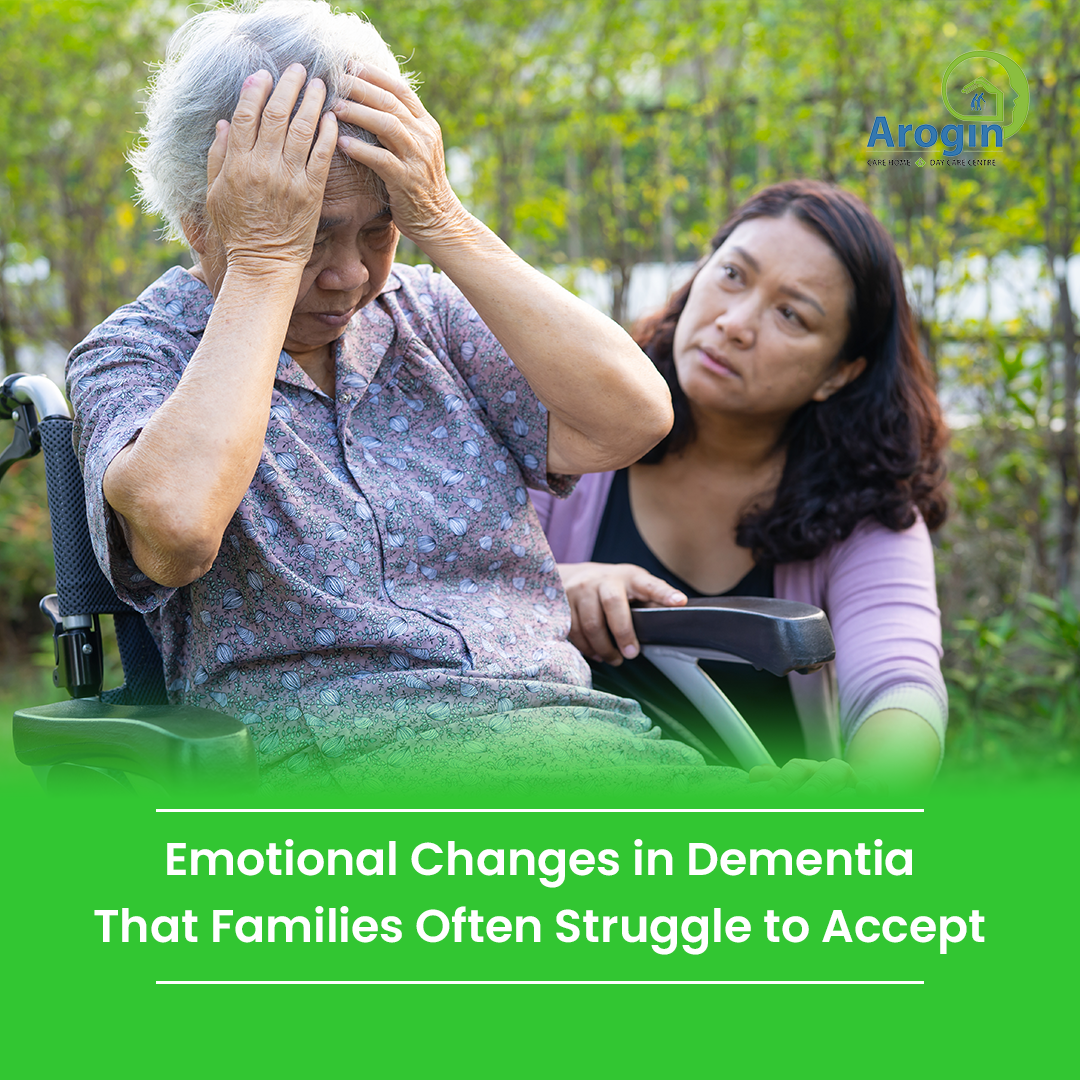
Dementia is commonly understood as a condition of memory loss and cognitive decline. What families are often less prepared for are the emotional and behavioral changes that emerge as the disease progresses. These changes can feel sudden, unsettling and deeply personal. For many caregivers, they are more difficult to accept than the physical limitations or forgetfulness itself.
In clinical practice, emotional changes are not secondary symptoms. They are a direct consequence of how dementia affects the brain. For families, especially in close-knit households common in Kathmandu these shifts can challenge long-standing relationships and emotional bonds.
At Arogin Care Home, we see daily how dementia affects not only the individual but the entire family system. Supporting emotional health is therefore not separate from medical care. It is an essential part of responsible dementia management.
Why Emotional Changes Occur in Dementia
Dementia gradually damages areas of the brain involved in emotional regulation, judgment, empathy and social behavior. As these networks deteriorate, a person may respond to situations in ways that seem unfamiliar or inappropriate. Emotional reactions may no longer align with context and the ability to filter or regulate feelings becomes impaired.
These behaviors are not deliberate. They are not expressions of character or intention. They are neurological symptoms. Understanding this distinction is often the first step toward acceptance, yet it is also one of the hardest.
Personality Changes and Loss of Familiar Traits
One of the most distressing experiences for families is witnessing a change in personality. A person who was once patient and calm may become irritable, suspicious or withdrawn. Others lose interest in activities and relationships that once defined them.
Families often describe this as a sense of emotional loss, even though their loved one is physically present. This grief can begin early and persist throughout the disease course. Recognizing personality change as a symptom of brain injury, rather than a personal rejection, is emotionally challenging but clinically important.
Anxiety, Fear and Constant Uncertainty
Many people living with dementia experience persistent anxiety. Confusion about surroundings, difficulty recognizing people or inability to understand what is happening can create a continuous sense of threat. This often appears as restlessness, repetitive questioning or resistance to care.
For families, watching a loved one live in a near-constant state of fear can feel helpless and exhausting. In structured care environments such as Arogin Care Home, predictable routines, familiar caregivers and calm surroundings are used deliberately to reduce anxiety and restore a sense of safety.
Mood Swings and Emotional Outbursts
Sudden shifts in mood are common in dementia. A person may cry, shout or become angry without an obvious trigger. These reactions may appear exaggerated or disproportionate to the situation.
Families frequently take these moments personally, especially when emotions are directed at them. Clinically, these outbursts reflect impaired emotional control, not intent or blame. Helping families understand this distinction can reduce conflict and emotional harm on both sides.
Depression and Social Withdrawal
Depression is particularly common in the earlier stages of dementia, when individuals still have insight into their declining abilities. Withdrawal from conversation, social events or family interaction is often misinterpreted as disinterest or stubbornness.
Families may feel guilt for being unable to “lift” their loved one’s mood. In reality, depression in dementia requires recognition, patience and sometimes professional intervention. Emotional support, gentle engagement and respect for individual comfort levels are essential components of care.
Loss of Emotional Regulation
As dementia progresses, emotional responses may no longer match the situation. Inappropriate laughter, sudden crying or emotional reactions that seem disconnected from reality can occur.
These behaviors are often confusing or embarrassing for families, especially in social or public settings. Understanding that the brain’s regulatory systems are impaired helps families respond with calm reassurance rather than correction or shame.
Reduced Empathy and Emotional Awareness
Some individuals with dementia appear emotionally distant or less responsive to the feelings of others. This change can feel deeply painful, particularly in cultures where emotional reciprocity within families is highly valued.
Damage to brain regions responsible for empathy and social awareness can make emotional responsiveness inconsistent. This does not mean affection or connection is gone. It means it may no longer be expressed in familiar ways.
Why Acceptance Is So Difficult for Families
Caring for someone with dementia involves a form of ongoing grief. Families are asked to adjust repeatedly, letting go of who their loved one was while continuing to care for who they are now. This emotional burden often includes sadness, frustration, guilt and physical exhaustion.
In Nepal, where family members commonly take on caregiving roles with limited external support, this strain can be particularly intense. Professional dementia care is therefore not only about patient safety. It is also about supporting families through this prolonged emotional process.
Supporting Emotional Well-Being in Dementia Care
At Arogin Care Home, emotional and psychological care is treated as an integral part of dementia management. Medical supervision, skilled nursing and personal care are combined with an environment designed to reduce distress and preserve dignity.
Families are actively involved in care planning and education, helping them understand emotional changes and respond with patience rather than confrontation. The goal is not to eliminate difficult behaviors but to reduce suffering and maintain quality of life for both residents and their families.
How Families Can Respond More Effectively
Caregivers often benefit from shifting their focus from correcting facts to responding to emotions. Maintaining routines, avoiding unnecessary confrontation and allowing flexibility in expectations can reduce distress. Seeking professional support is not a failure. It is a necessary step when caregiving becomes overwhelming.
Conclusion
Emotional changes in dementia are among the most misunderstood and painful aspects of the condition. They challenge families at a deeply personal level and often test emotional endurance more than physical caregiving tasks.
Understanding that these changes arise from neurological damage, not choice or personality, can help transform frustration into compassion. With appropriate medical care, emotional support and a structured environment, it is possible to preserve dignity and human connection even as dementia progresses.
At Arogin Care Home, the focus remains on respectful, clinically grounded care that supports both individuals living with dementia and the families who walk this journey alongside them.