As our loved ones age, their needs both physical and emotional begin to change. Sometimes the change is gradual like needing a little help with daily activities. Other times, it’s sudden, perhaps after an illness or accident. For families in Nepal, one of the most important and sensitive decisions is: Should elderly care be provided at home, or is a care home the better choice?
Home care have unique advantages and challenges. The right decision depends on health requirements, available family support, financial considerations and most importantly, the preferences of the senior themselves. This blog will help you understand the differences, weigh the pros and cons and make an informed decision about home care vs care home for your elderly loved one.
1. Understanding Home Care
What is Home Care?
Home care for seniors means support to elderly individuals in their own home environment. This support can be basic such as help with cooking, cleaning and personal hygiene or more advanced such as professional nursing for medical conditions.
Home care can be delivered by:
- Family members who adjust their schedules to care for elderly person.
- Trained caregivers hired for part-time or full-time assistance.
- Visiting nurses or therapists who provide specialized medical services.
Advantages of Home Care
- Familiar surroundings: Living at home lets seniors stay in a place full of memories and comfort which helps to improve emotional well-being and lowers confusion, especially for those with dementia.
- Personalized routines: Home care adapts to the senior’s existing lifestyle rather than forcing them to adjust to a facility’s schedule.
- Family connection: Being at home allows easier and more frequent interaction with children, grandchildren, and neighbors.
- Reduced relocation stress: Moving to a new environment can be emotionally challenging; staying home eliminates this stress.
Challenges of Home Care
- Availability of trained caregivers: Finding reliable, experienced home care professionals in Nepal can be difficult.
- Home modifications: Homes may require adjustments such as ramps, grab bars or non-slip flooring for safety.
- Limited medical supervision: Unlike care homes, home care may not offer 24/7 medical attention unless multiple caregivers are hired.
- Caregiver burnout: Family members providing care can experience fatigue or stress, especially if juggling jobs and other responsibilities
2. Understanding Care Homes
What is a Care Home?
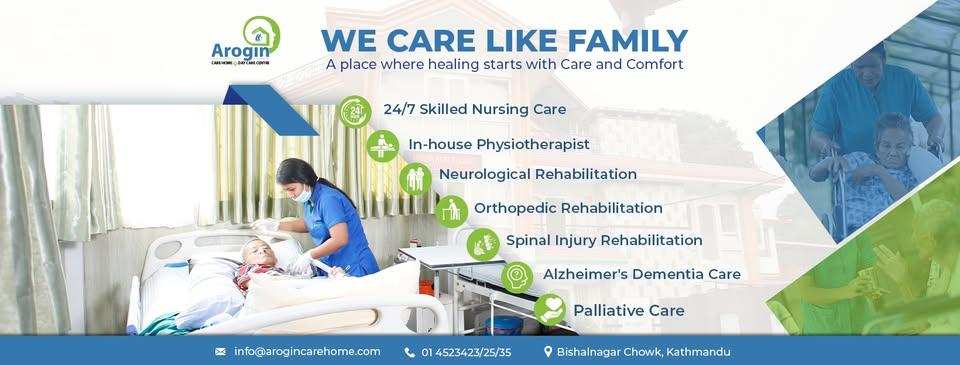
A care home (also known as an old age home or nursing home) is a residential facility where elderly individuals live full-time or temporarily.These homes offer accommodation, meals, daily support, and often medical supervision.In Nepal, care homes range from small, family-run facilities to larger institutions with professional staff and medical equipment.
Advantages of Care Homes
- Professional care: Staff are trained to handle elderly needs including personal hygiene, medication management, and mobility assistance.
- Medical supervision: Many care homes have on-site nurses or access to doctors for emergencies.
- Social interaction: Seniors can build friendships with other residents reducing loneliness and isolation.
- Relief for families: Families can have peace of mind knowing their loved one is cared even if they cannot be physically present.
Challenges of Care Homes
- Emotional adjustment: Leaving home can be emotionally difficult for seniors especially if they have lived in the same place for decades.
- Loss of independence: Care homes often have structured schedules which may feel restrictive for some seniors.
- Distance from family: If the care home is far from home, family visits may be less frequent.
- Variable quality: Not all care homes in Nepal maintain the same standard making research and visits essential before making a choice.
3. Key Factors to Consider Before Deciding
Choosing between home care and a care home involves evaluating multiple aspects:
- Health Needs: Seniors with conditions such as Alzheimer’s, severe mobility issues, or chronic illnesses may require constant monitoring, making a care home more suitable.
- Family Availability: If family members have limited time, home care may require hiring extra help or relying on professional caregivers.
- Budget: Home care services can be charged hourly or daily, while care homes in Nepal generally have fixed monthly rates. Comparing long-term costs is crucial.
- Emotional Well-being: Some seniors feel happiest surrounded by familiar things at home, while others thrive in the social atmosphere of a care home.
- Location & Accessibility: Consider proximity to family members, hospitals, and community spaces.
4. The Blended Approach
In recent years, many families have embraced a blended model of elderly care. This approach combines the comfort of home care with the security of care home services when needed.
Examples include:
- Keeping seniors at home with part-time caregivers and using short stays in care homes for respite.
- Enrolling seniors in day-care programs offered by care homes so they can socialize during the day but return home in the evenings.
- Transitioning gradually from home care to full-time care home living if the senior’s health declines.
- This model allows flexibility, balances emotional needs with professional care, and can often be more cost-effective.
5. Tips for Making the Right Decision
- Involve the senior in the Decision: Their comfort and preferences should be central to the choice.
- Visit Care Homes Personally: Check cleanliness, staff behavior, safety measures, and medical facilities.
- Assess Home Safety: If opting for home care, ensure the home environment is secure and senior-friendly.
- Plan Financially: Consider long-term sustainability of the chosen care option.
- Seek Professional Guidance: Doctors, social workers, and elder care consultants can provide valuable input.
Conclusion
Deciding between home care and a care home is one of the most personal and impactful choices a family can make for their elderly loved one. There is no universal answer — what matters most is ensuring safety, dignity, and quality of life.Some families find that home care for seniors keeps their loved one happiest, surrounded by memories and family. Others discover that the structured environment and medical supervision of a care home offers peace of mind and better overall health outcomes. A care home (also known as an old age home or nursing home) is a residential facility where elderly individuals live full-time or temporarily. These homes offer accommodation, meals, daily support, and often medical supervision. In Nepal, care homes range from small, family-run facilities to larger institutions with professional staff and medical equipment.